The real question: is pictory ai good for marketing?
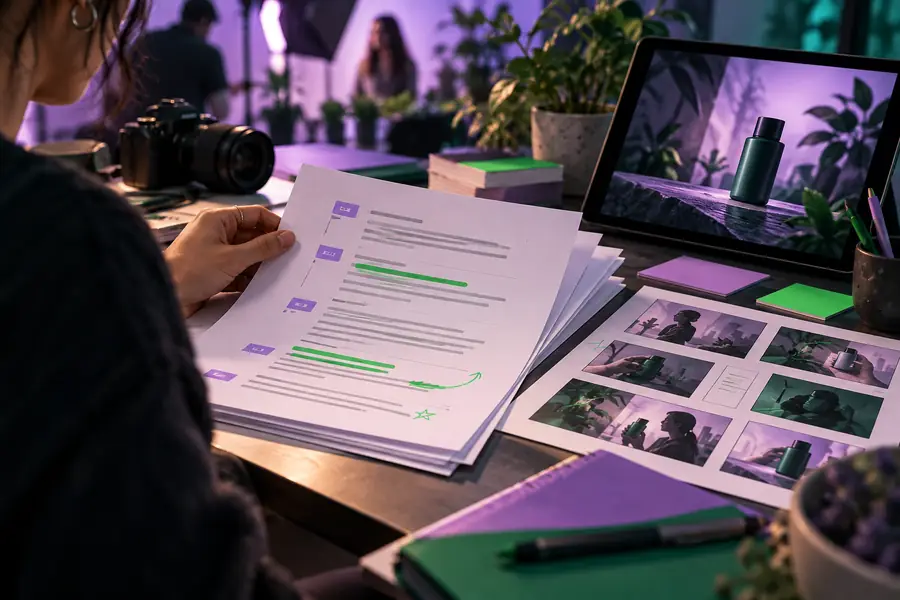
If you are asking is pictory ai good for marketing, start with the campaign brief rather than the software. Pictory may be worth evaluating when you need to turn an approved message into a video draft, but the finished asset still needs editorial, brand, and rights checks.
This independent Pictory guide links to Vidione, a separate paid tool for one prompt-to-video clip or a talking avatar made from a photo, script and voice. Signup includes 0 generation credits; generation requires a subscription ($99, $199 or $599/month). Confirm current terms before paying.
A polished-looking clip is not proof that its claims, assets, or call to action are ready to publish. Keep these decisions with the campaign owner.
It cannot verify your claims
An appealing video can still repeat an outdated offer, unsupported result, or inaccurate product statement. That risk matters most when a short clip leaves little room for context.
Workaround
Approve the script against current product documentation and have the appropriate reviewer sign off before distribution.
It cannot grant asset rights
The presence of an image, clip, voice, or soundtrack in a draft does not establish permission to use it in an advertisement.
Workaround
Check the applicable asset terms and keep a record of permissions for every published campaign.
It cannot identify your best-performing message
A draft can express a hypothesis; it cannot tell you which audience, hook, or offer will perform best in your channels.
Workaround
Test clearly differentiated messages against the same campaign objective and review the results.
It cannot replace accessibility review
Small text, rapid cuts, and unclear captions can make a video difficult to follow, especially without sound.
Workaround
Watch the final version muted and on a small screen, then inspect captions and on-screen text.
where we slot in
Use Pictory as one possible stop between an approved message and a publishable campaign asset. The steps below describe a review workflow, not a promise of specific controls.
1
Prepare the brief
Name the audience, placement, single takeaway, supporting evidence, desired action, and any words or visuals the team must avoid. Choose one message per draft so reviewers can judge whether it comes through.
2
Develop a video draft
Use the approved message as the basis for a candidate video. Compare what appears on screen with the original brief; do not assume a generated or assembled scene carries the intended meaning.
3
Review before distribution
Check factual accuracy, brand fit, permissions, readability, and the action shown to viewers. Ask a colleague unfamiliar with the brief what they understood, then revise or reject the draft.
before/after
The useful change is not simply from text to video. It is from an untested campaign idea to a video draft the team can evaluate against a brief.
Before: approved message
After: reviewable video draft
Core material
Before: approved message
A brief, script, article, or approved product explanation
After: reviewable video draft
A candidate sequence of visuals, text, and audio
Audience fit
Before: approved message
The intended viewer is described in the brief
After: reviewable video draft
Reviewers can judge whether that viewer will understand the clip
Claim accuracy
Before: approved message
Sources and approved wording can be checked
After: reviewable video draft
Every visible and spoken claim must still be checked
Brand expression
Before: approved message
Tone and visual rules are documented
After: reviewable video draft
Their application can be judged in context
Channel readiness
Before: approved message
Placement and objective are planned
After: reviewable video draft
The draft can be reviewed for pacing and legibility in that placement
Decision
Before: approved message
The team agrees on what to communicate
After: reviewable video draft
The team decides whether to revise, test, or decline the asset
A message becomes something to review
Written message
Video concept
These images illustrate the planning-to-review transition; they are not a verified before-and-after result from the same input.
deliverable spec
Bring a brief, then judge the draft
This article discusses Pictory, but the link opens Vidione, a separate paid service. Draft one prompt for a marketing clip or provide a photo, script and voice for a talking avatar; use its timeline to edit before export. It does not convert campaign articles, URLs or slide decks into videos automatically. Signup includes 0 generation credits, and generation requires a $99, $199 or $599/month plan (verify current terms).
Pictory can be worth evaluating when your team has approved source material and wants to explore a video version of its message. Whether it is good for your campaign depends on the quality of the resulting draft, your review requirements, and how it performs with the intended audience. Do not judge it solely by how quickly a first version appears.
Bring a short brief identifying the audience, the main claim, evidence for that claim, the desired viewer action, and the intended placement. Include brand and legal constraints up front so reviewers have a clear standard. This makes the evaluation more meaningful than starting with a vague topic.
A finished-looking video still needs checks for accuracy, usage rights, accessibility, and brand fit. Review both the visuals and any spoken or on-screen wording. Publishing is a campaign decision, not an automatic next step after drafting.
Run a small test using a real, approved brief and compare the draft with your usual review criteria. Note what your team must change, verify, or replace before the asset is usable. If those revisions outweigh the benefit of the draft, the fit may be limited for that campaign.